SYSTEM ONLINE · SEO/GEO SPECIALIST · DEVELOPER · ANALYST
YOUR BRAND.
VISIBLE.
SEO backed by real development, content, and data. Built to rank on Google and get cited by AI answer engines from day one.
CURRENT STACK
next.js / react
seo + geo audits
ga4 / bigquery
ai-seo content

TRUSTED BY TEAMS AT
WHAT I DO
Core Capabilities
Four disciplines, one operator, one continuous loop from build to rank to proof.
Technical SEO & GEO
Audits, structure, schema, and entity optimization that put you in blue links and AI answers.
Web Development
High-performance, scalable architectures built for speed and indexability from the first commit.
AI-SEO Content
Structured, citeable, intent-aligned content that ranks in SERPs and gets quoted by AI engines.
Data Analytics
GA4, Search Console, and BigQuery turned into decisions. I measure what works and cut what does not.
WHY DEVBEHINDYOU
One operator. Four disciplines. Zero handoffs.
Most teams split building, ranking, writing, and measuring across four vendors. Every handoff loses context and speed. I keep the loop in one head: the developer who ships the page is the SEO who structures it, the writer who fills it, and the analyst who proves it worked.
Execution is the best strategy.
PROOF
Featured Case Study
AI-SEO CONTENT · PERSONAL BRANDING & MARKETING SERVICES
AI-SEO Content and Strategy for Ohh My Brand
Ohh My Brand
Ohh My Brand was rebuilding its brand and needed a content engine to match. The existing blog had around 60 old posts that were scraped or simply weren't ranking, holding the domain back instead of helping it. Every freelancer before this engagement was fast and generic, or slow and precise. Never both.
READ THE FULL CASE →150+
AI-SEO BLOG POSTS DELIVERED
60+
SCRAPED / NON-RANKING POSTS REMOVED
4+
FULL WEB TRAFFIC AUDIT
METHOD
Operational Framework
The same four-phase loop runs every engagement. Order carries the logic: nothing gets executed before it is audited and prioritized.
PHASE 01
Audit
Technical, content, and visibility analysis. I find what blocks rankings and AI citations.
PHASE 02
Strategy
A prioritized roadmap ranked by ROI, not by what looks busy.
PHASE 03
Execution
I implement directly: code fixes, structure changes, and content production.
PHASE 04
Reporting
Transparent KPI tracking. You see the same dashboards I do.
VOICES
What Clients Say
"Our site had content, but nothing connected. Ashutosh rebuilt the structure first, then the pages, then the blog plan. Six months later our service pages actually rank for the terms we care about, not just our brand name."
"The monthly report used to be a spreadsheet nobody opened. Now it tells us what to fix next before we even ask. That change alone was worth the engagement."
25+
REPOS SHIPPED
3
DISCIPLINES, ONE HEAD
<1s
LCP TARGET
2026
GEO-READY BUILDS
FULL DATA ON THE RESULTS PAGE →
FIELD NOTES
Latest Insights
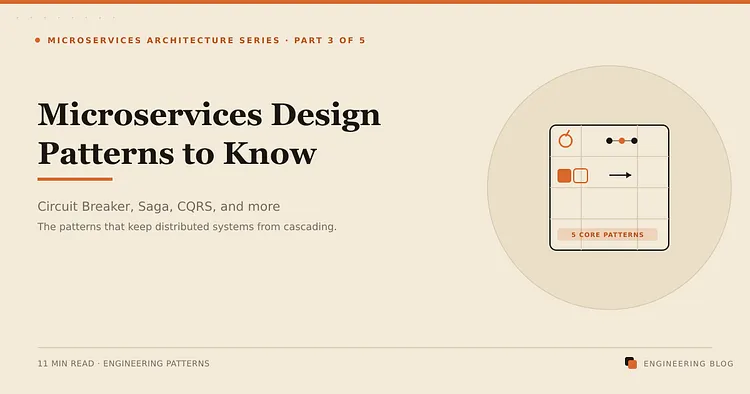
MICROSERVICES PATTERN · JUL 6, 2026
Microservices Design Patterns Every Developer Must Know
Five patterns keep microservices reliable in production: Domain-Driven Design for service boundaries, Circuit Breaker for resilience, Saga for distributed transactions, CQRS for read and write separation, and event-driven communication for loose coupling. A 2026 survey found 92% of enterprises report successful microservices adoption during implementation, though production scaling remains where things break (Typedef.ai, 2026).
READ ON MEDIUM ↗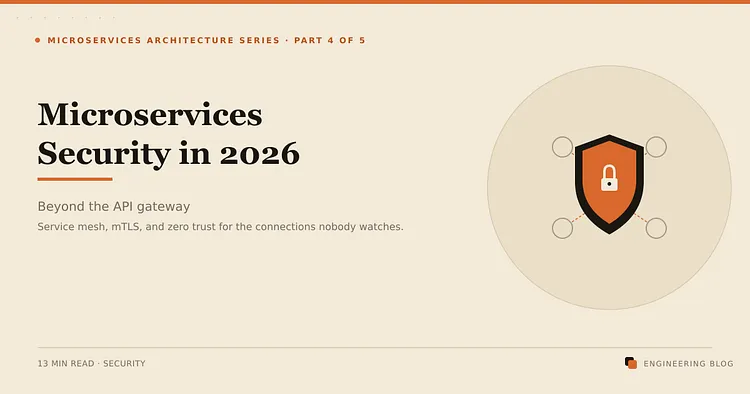
MICROSERVICES SECURITY · JUL 3, 2026
Microservices Security in 2026: API Gateways, Service Mesh & Zero Trust Architecture
Securing microservices requires more than an API gateway. 99% of organizations experienced at least one API security issue in the past year, and 43% of microservices breaches trace back to weak service-to-service identity management, not external attacks (CybelAngel, 2026; Haltdos, 2025). Treating your API gateway as your only layer of security is like putting a titanium lock on your front door and leaving every ground-floor window wide open.
READ ON MEDIUM ↗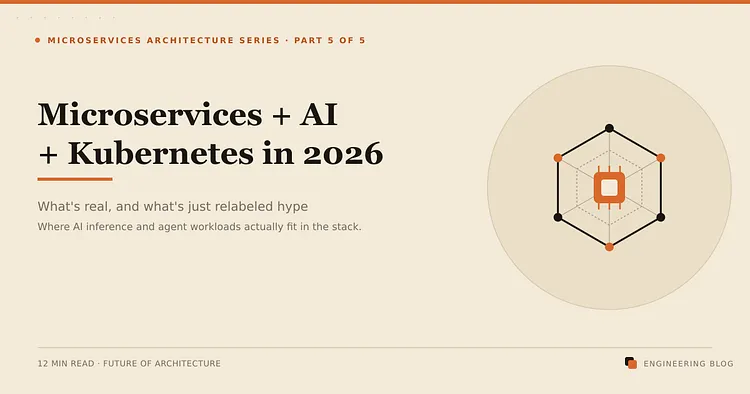
FUTURE OF MICROSERVICES · JUN 29, 2026
Microservices + AI + Kubernetes in 2026: The Future of Cloud-Native Architecture
Kubernetes now runs in production for 82% of container users, and 66% of organizations hosting generative AI models use it for inference workloads, making AI microservices a core part of operations rather than a separate system (CNCF, 2026). We all love the idea of autonomous AI agents managing our microservices, until one hallucinates and tries to spin up 500 GPU instances at 3 AM.
READ ON MEDIUM ↗FAQ
Before You Ask
READY TO BE FOUND?
One message starts it. You get a reply within one business day.